Concepts — the mental model
This page is the thread that ties every lab together. Read it once before you start; come back to it whenever a lab makes you ask "why are we doing this?"
From LLM call to agent
A large language model on its own is a function: text in, text out. It has no memory of previous calls, can't take actions in the world, and can't decide to do something in multiple steps.
An agent wraps that model in a loop that gives it three new powers:
- Tools — it can act (call functions, search the web, run code), not just talk.
- Memory / context — it can remember across turns and sessions.
- Control flow — it can plan, decide what to do next, and repeat until done.
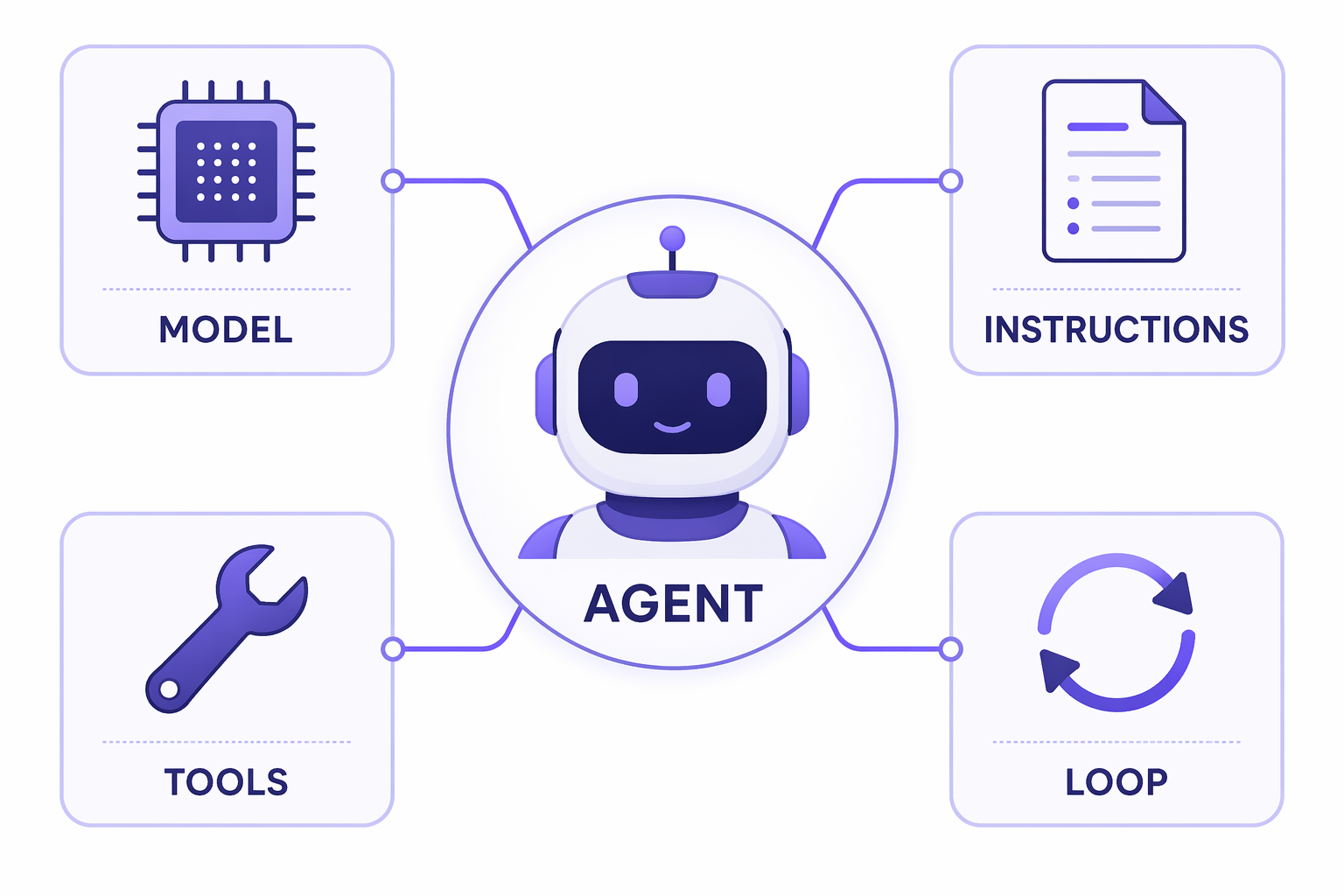
The simplest definition we'll use all day:
Agent = model + instructions + tools + a loop that runs until the task is done.
You'll build exactly that in M1 and M2.
The agent loop
When you call await agent.run("..."), the framework runs a loop:
- Send the conversation + available tools to the model.
- If the model asks to call a tool, run it and feed the result back.
- Repeat until the model returns a final answer (no more tool calls).
This single loop — sometimes called ReAct (reason + act) — is the beating heart of every agent. Everything else in this workshop is about making that loop smarter, safer, and more durable.
Context engineering
The model only ever sees what fits in its context window. Deciding what goes in that window on every turn is the discipline of context engineering, and it's where most real-world agent quality comes from.
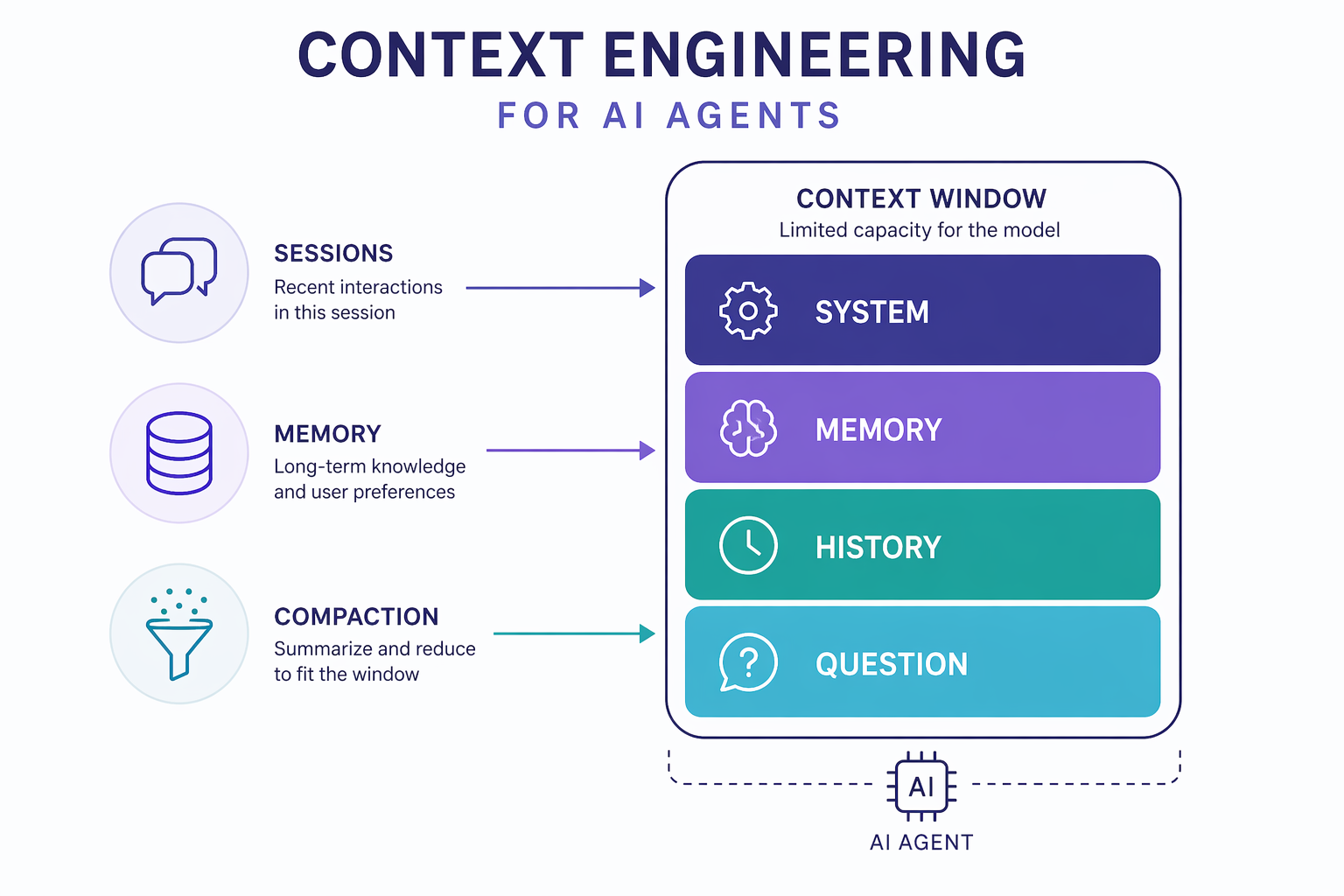
The levers you'll pull in M3:
| Lever | What it does | Agent Framework piece |
|---|---|---|
| Sessions | Keep conversation history across turns | agent.create_session() |
| Context providers | Inject dynamic facts/instructions before each run | ContextProvider |
| Memory | Persist what matters about the user/task | ContextProvider + state, MemoryStore |
| Skills | Keep expertise on disk and load it only when relevant | SkillsProvider, FileSkillsSource, InlineSkill |
| Compaction | Summarize/trim history so you never overflow the window | CompactionProvider |
Garbage in, garbage out applies twice over for agents. The model is only as good as the context you engineer for it.
Skills deserve a note, because they invert the usual instinct. Everything the agent knows how to do could go in the system prompt — but that costs tokens on every turn and buries the part that matters. A skill keeps its instructions, reference documents, and scripts in a folder; the agent sees only a one-line description up front and loads the rest on demand. Fifty skills cost fifty short lines per turn, not fifty pages.
The agent harness
As you add tools, memory, planning, compaction, and observability, you end up re-assembling the same machinery every time. The agent harness is that machinery, packaged.
Agent Framework provides create_harness_agent(...), a factory that wires up a
batteries-included agent in one call:
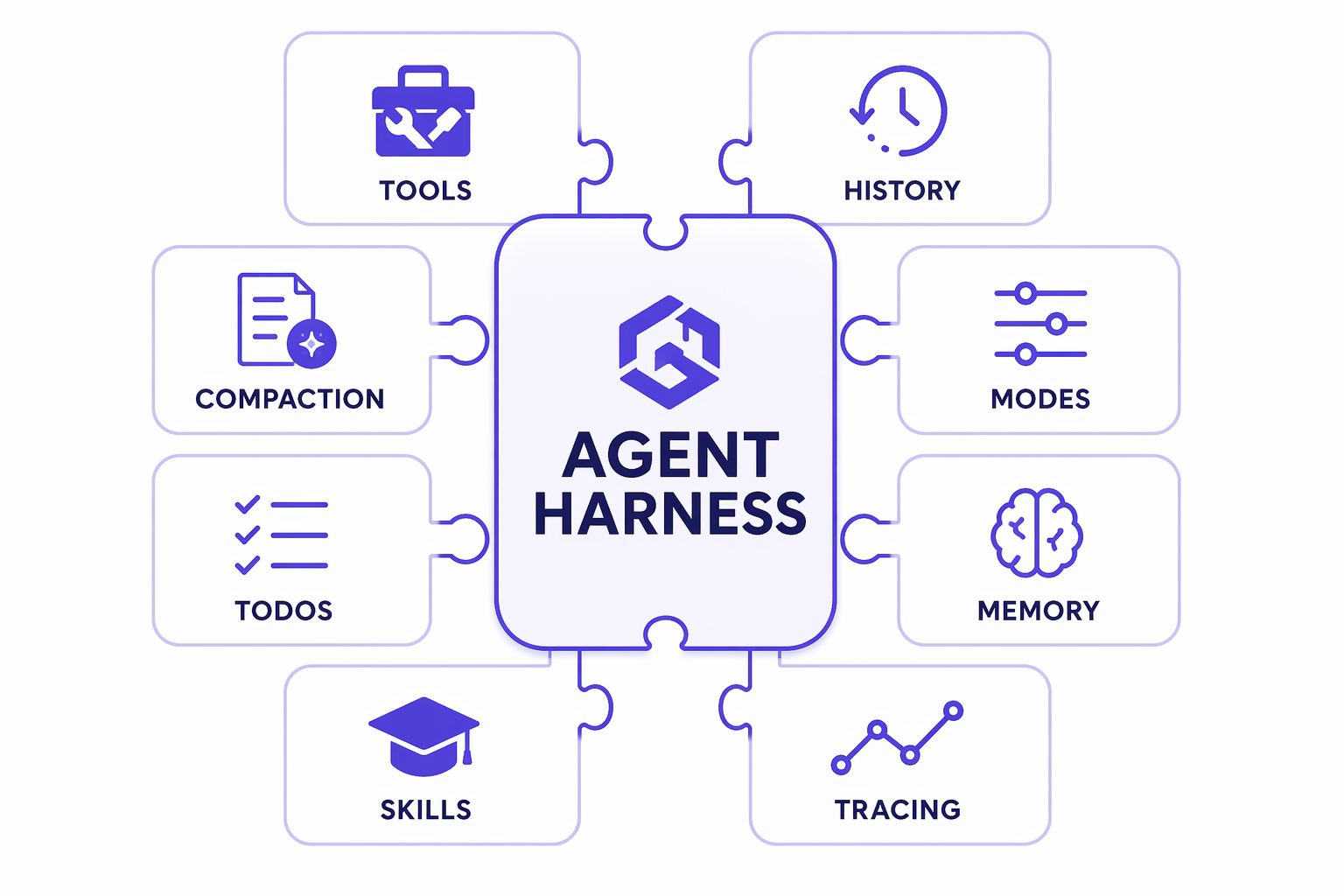
| Harness component | What it adds |
|---|---|
| Function invocation | The automatic tool-calling loop |
| History + persistence | Conversation saved after every model call |
| Compaction | Automatic context-window management |
| TodoProvider | The agent plans and tracks its own work items |
| AgentModeProvider | Plan vs. execute mode tracking |
| MemoryStore | File-based durable memory across sessions |
| SkillsProvider | Progressive discovery/loading of reusable skills |
| OpenTelemetry | Built-in tracing |
You'll teach each piece in isolation, then assemble the whole thing in M4 — the centerpiece of the day.
When one agent isn't enough
Some problems are better solved by several specialized agents collaborating. In M5 you'll meet the core patterns:
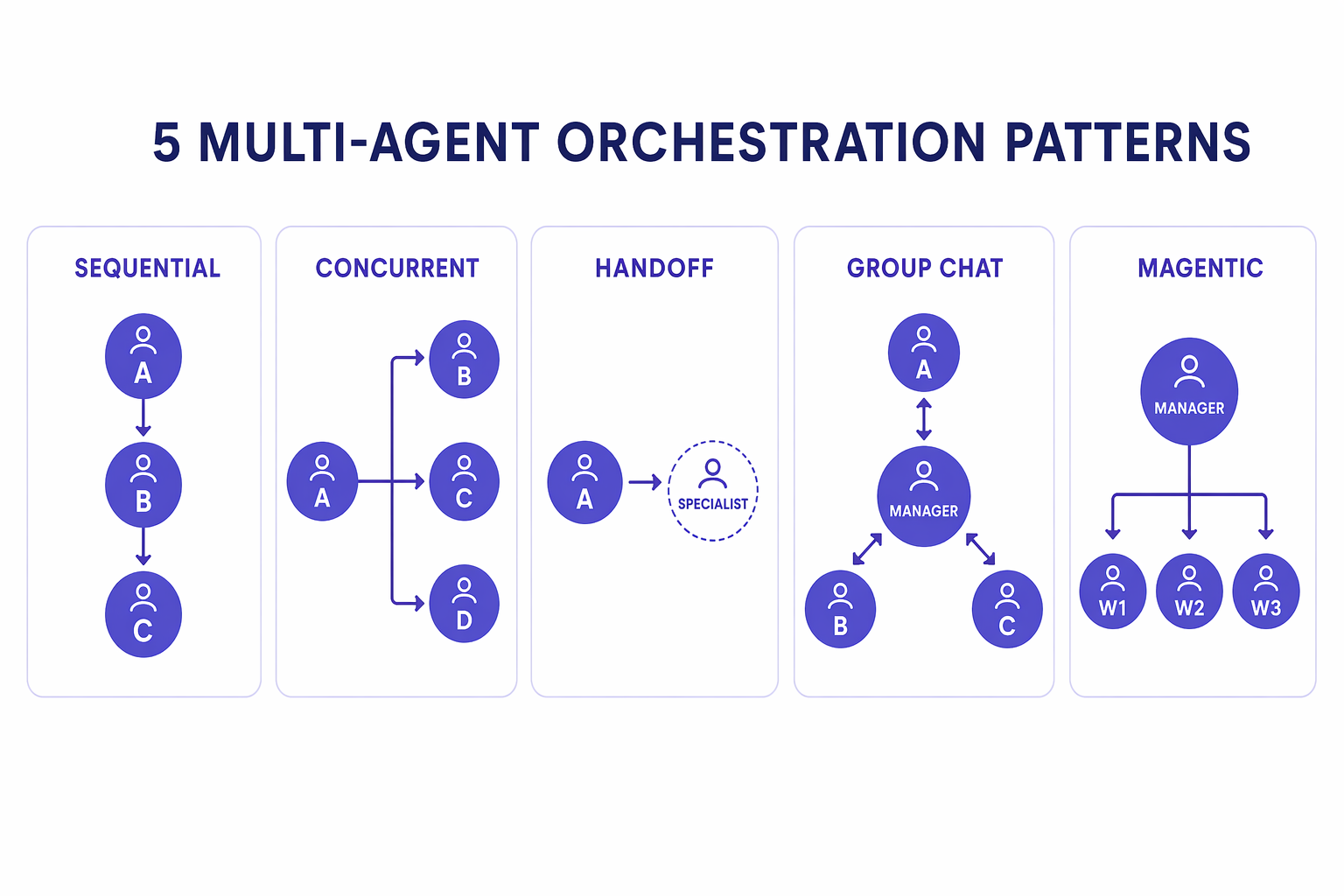
| Pattern | Shape | Good for |
|---|---|---|
| Sequential | A → B → C | Pipelines / multi-stage processing |
| Concurrent | A, B, C in parallel → merge | Independent sub-tasks, then aggregate |
| Handoff | Control passes to the right specialist | Triage, escalation |
| Group chat | Agents converse under a manager | Debate, collaborative reasoning |
| Magentic | A manager plans and delegates dynamically | Open-ended, complex tasks |
Agent Framework also has typed, checkpointable workflows (executors + edges) for when you need explicit, recoverable control flow.
Optimize, then operationalize
A demo that works once isn't a product. The last two modules close the loop:
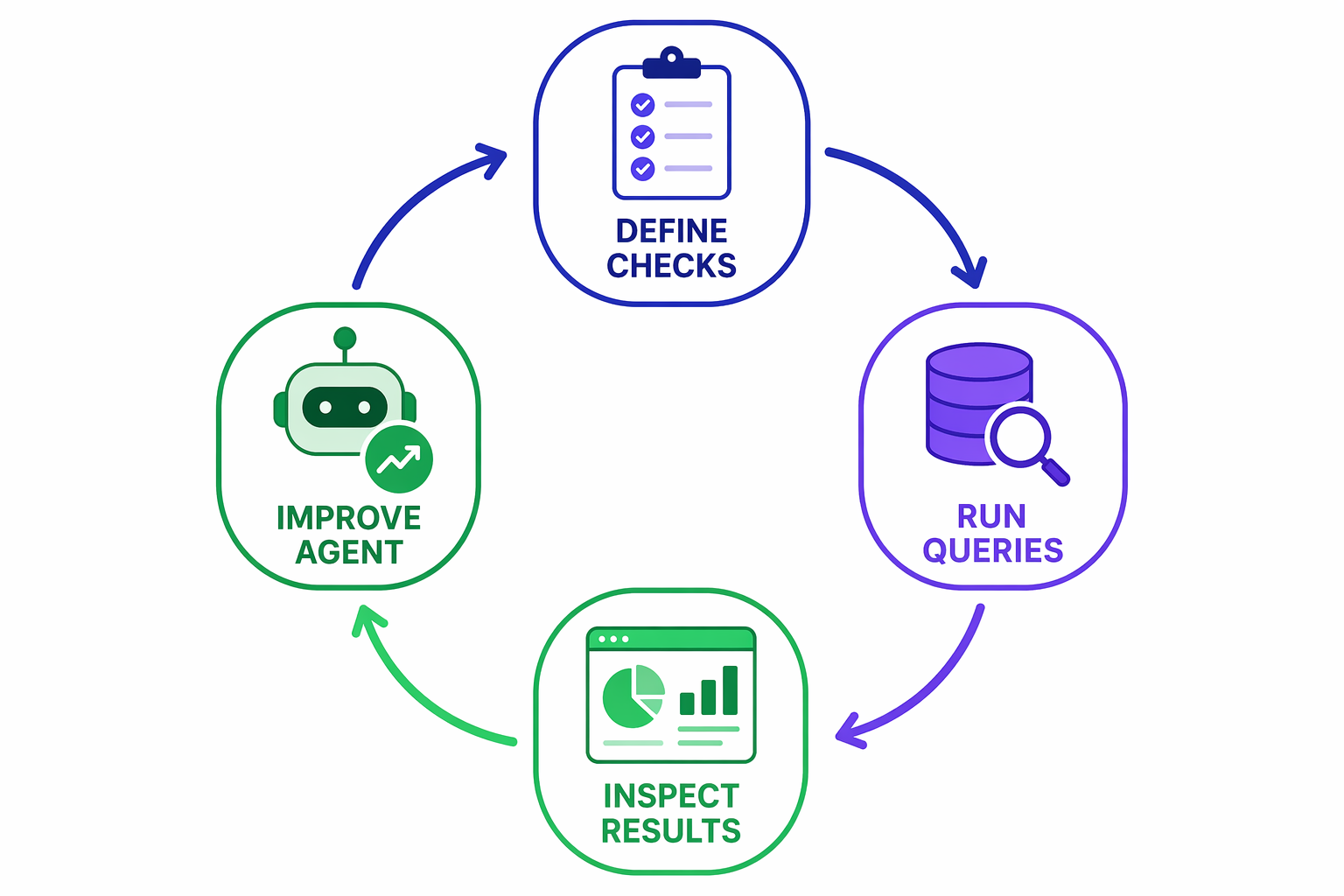
- M6 · Evaluation — measure agent quality (correctness, groundedness, task success) so you can improve it on purpose instead of by vibes. The lab evaluates a Contoso Retail support bot against a golden dataset — known-correct answers and the tool calls each one requires.
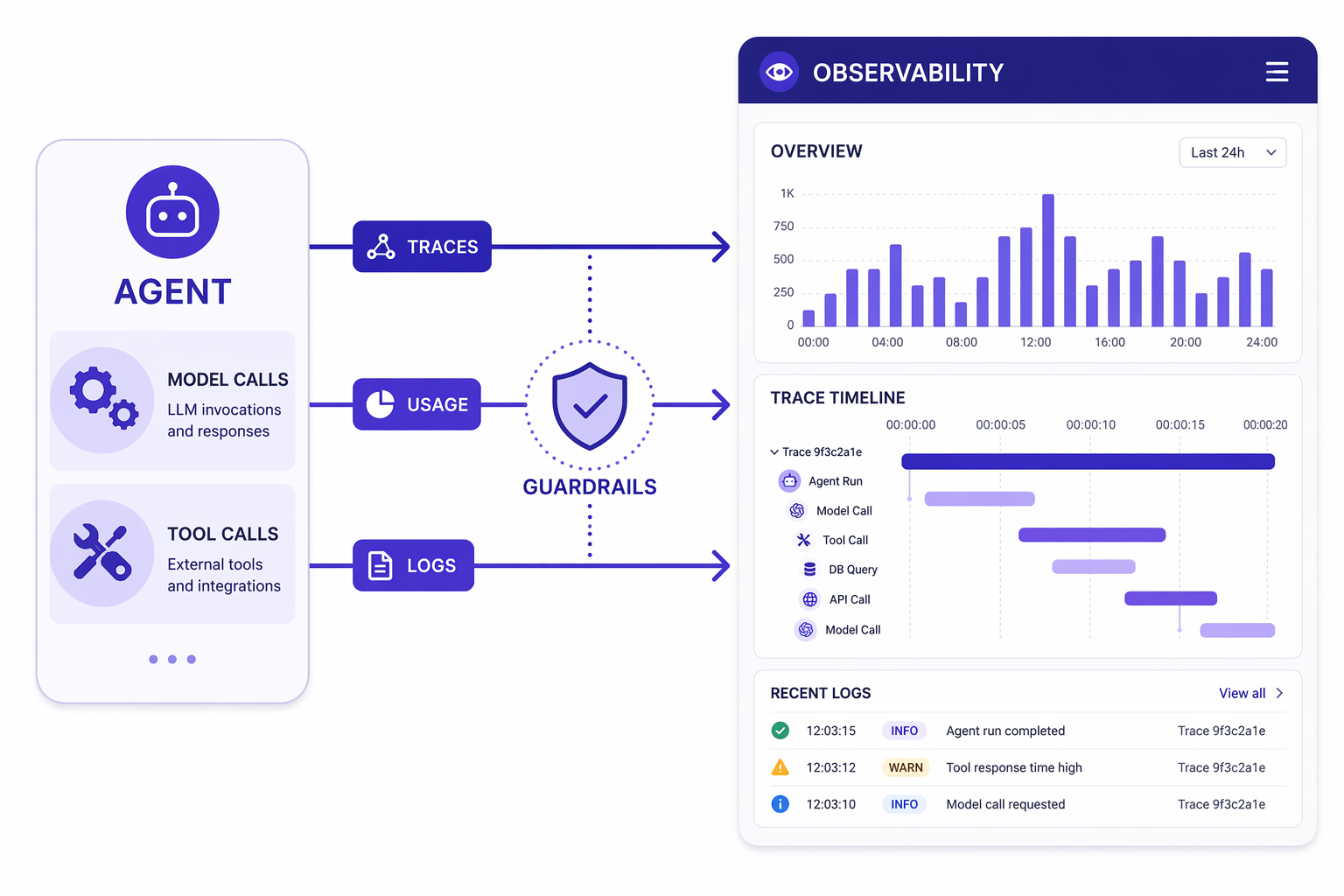
- M7 · Operationalize — see inside the agent in production with OpenTelemetry tracing and middleware for logging, usage tracking, and guardrails.
How it all fits
   M1 build → M2 act → M3 remember → M4 assemble (harness)
                                          │
                         M5 collaborate (multi-agent)
                                          │
                  M6 measure  ──►  M7 operate  ──►  M8 ship
Keep this picture in mind. Every lab is one box in it.
→ Start building: M1 · Your First Agent